



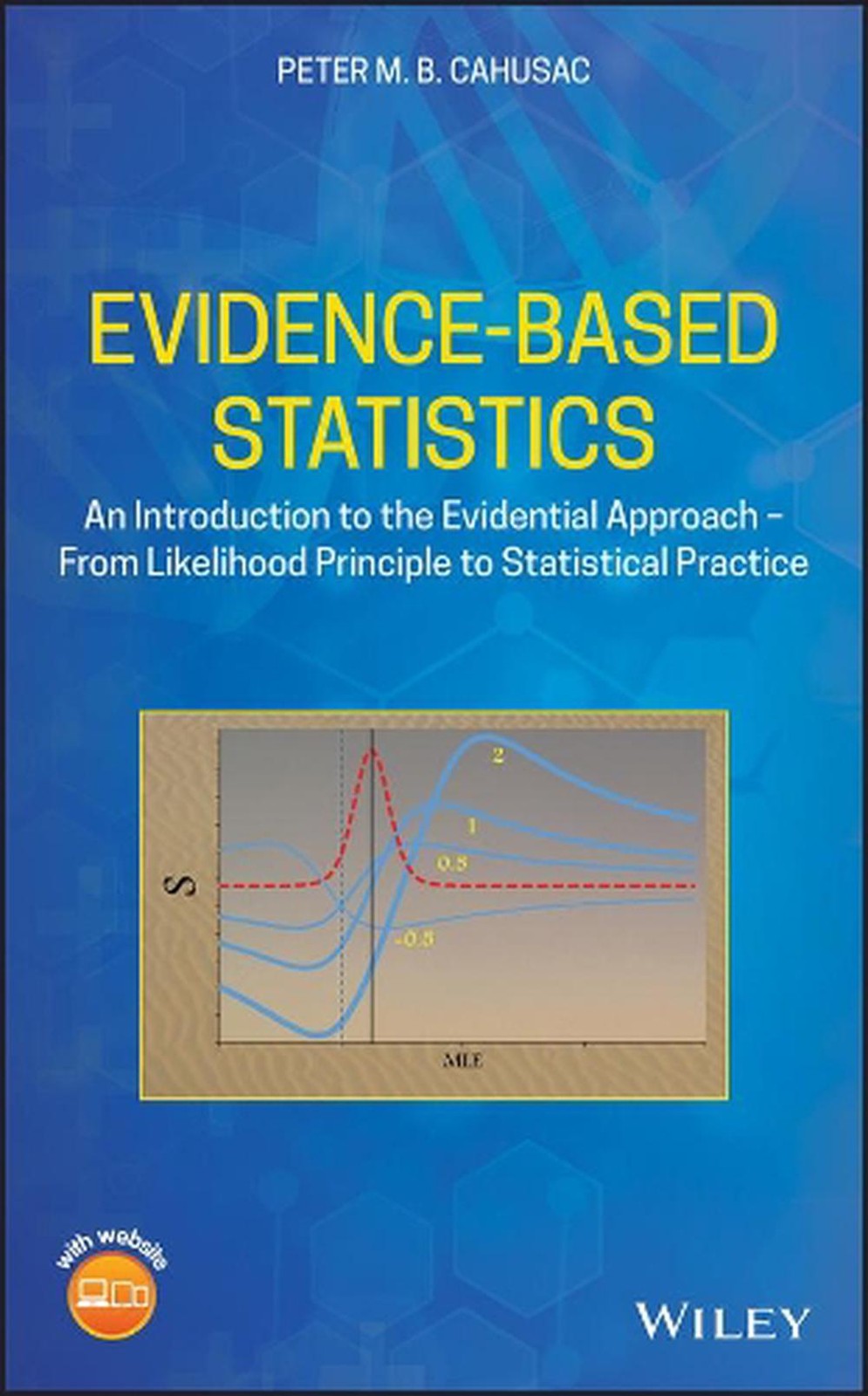

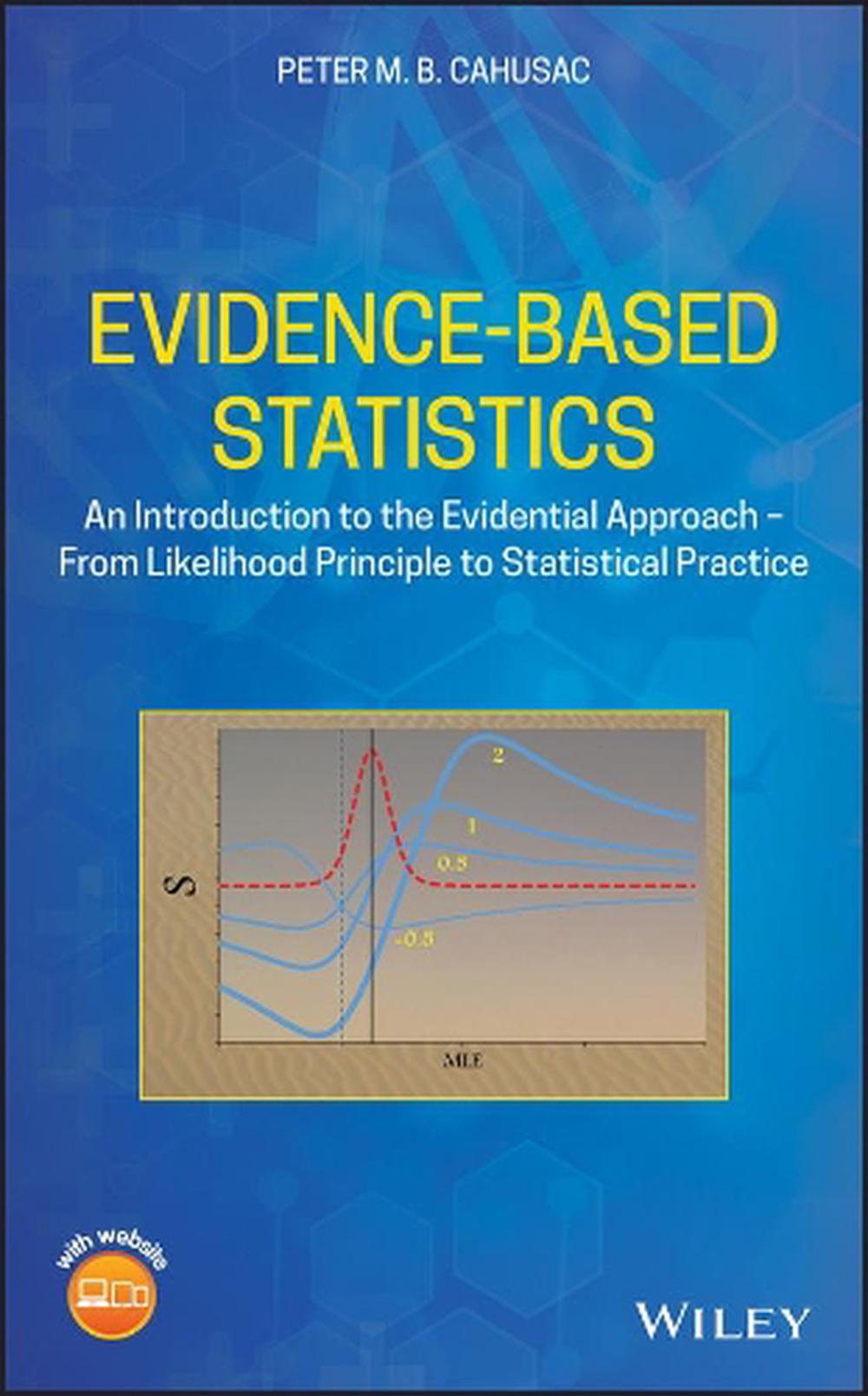
Evidence-Based Statistics
by Peter M.B. Cahusac
Evidence-Based Statistics: An Introduction to the Evidential Approach – from Likelihood Principle to Statistical Practice provides readers with a comprehensive and thorough guide to the evidential approach in statistics. The approach uses likelihood ratios, rather than the probabilities used by other statistical inference approaches. The evidential approach is conceptually easier to grasp, and the calculations more straightforward to perform. This book explains how to express data in terms of the strength of statistical evidence for competing hypotheses. The evidential approach is currently underused, despite its mathematical precision and statistical validity. Evidence-Based Statistics is an accessible and practical text filled with examples, illustrations and exercises. Additionally, the companion website complements and expands on the information contained in the book. While the evidential approach is unlikely to replace probability-based methods of statistical inference, it provides a useful addition to any statistician's "bag of tricks." In this book:
- It explains how to calculate statistical evidence for commonly used analyses, in a step-by-step fashion
- Analyses include: t tests, ANOVA (one-way, factorial, between- and within-participants, mixed), categorical analyses (binomial, Poisson, McNemar, rate ratio, odds ratio, data that's 'too good to be true', multi-way tables), correlation, regression and nonparametric analyses (one sample, related samples, independent samples, multiple independent samples, permutation and bootstraps)
- Equations are given for all analyses, and R statistical code provided for many of the analyses
- Sample size calculations for evidential probabilities of misleading and weak evidence are explained
- Useful techniques, like Matthews's critical prior interval, Goodman's Bayes factor, and Armitage's stopping rule are described
Hardcover
English
Brand New
Back Cover
Evidence-Based Statistics: An Introduction to the Evidential Approach - from Likelihood Principle to Statistical Practice provides readers with a comprehensive and thorough guide to the evidential approach in statistics. The approach uses likelihood ratios, rather than the probabilities used by other statistical inference approaches. The evidential approach is conceptually easier to grasp, and the calculations more straightforward to perform. This book explains how to express data in terms of the strength of statistical evidence for competing hypotheses. Currently the evidential approach is underused, despite its mathematical precision and statistical validity. Evidence-Based Statistics is an accessible and practical text filled with examples, illustrations and exercises. Additionally, the companion website complements and expands on the information contained in the book. While the evidential approach will probably not replace probability based methods of statistical inference, it provides a useful addition to any statistician's "bag of tricks". In this book: It explains how to calculate statistical evidence for commonly used analyses, in a step-by-step fashion Analyses include: t tests, ANOVA (one-way, factorial, between- and within-participants, mixed), categorical analyses (binomial, Poisson, McNemar, rate ratio, odds ratio, data that's 'too good to be true', multi-way tables), correlation, regression and nonparametric analyses (one sample, related samples, independent samples, multiple independent samples, permutation and bootstraps) Equations are given for all analyses, and R statistical code provided for many of the analyses Sample size calculations for evidential probabilities of misleading and weak evidence are explained Useful techniques, like Matthews's critical prior interval, Goodman's Bayes factor, and Armitage's stopping rule are described Recommended for undergraduate and graduate students in any field that relies heavily on statistical analysis, as well as active researchers and professionals in those fields, Evidence-Based Statistics: An Introduction to the Evidential Approach - from Likelihood Principle to Statistical Practice belongs on the bookshelf of anyone who wants to amplify and empower their approach to statistical analysis.
Flap
Evidence-Based Statistics: An Introduction to the Evidential Approach - from Likelihood Principle to Statistical Practice provides readers with a comprehensive and thorough guide to the evidential approach in statistics. The approach uses likelihood ratios, rather than the probabilities used by other statistical inference approaches. The evidential approach is conceptually easier to grasp, and the calculations more straightforward to perform. This book explains how to express data in terms of the strength of statistical evidence for competing hypotheses. Currently the evidential approach is underused, despite its mathematical precision and statistical validity. Evidence-Based Statistics is an accessible and practical text filled with examples, illustrations and exercises. Additionally, the companion website complements and expands on the information contained in the book. While the evidential approach will probably not replace probability based methods of statistical inference, it provides a useful addition to any statistician's "bag of tricks". In this book: It explains how to calculate statistical evidence for commonly used analyses, in a step-by-step fashion Analyses include: t tests, ANOVA (one-way, factorial, between- and within-participants, mixed), categorical analyses (binomial, Poisson, McNemar, rate ratio, odds ratio, data that's 'too good to be true', multi-way tables), correlation, regression and nonparametric analyses (one sample, related samples, independent samples, multiple independent samples, permutation and bootstraps) Equations are given for all analyses, and R statistical code provided for many of the analyses Sample size calculations for evidential probabilities of misleading and weak evidence are explained Useful techniques, like Matthews's critical prior interval, Goodman's Bayes factor, and Armitage's stopping rule are described Recommended for undergraduate and graduate students in any field that relies heavily on statistical analysis, as well as active researchers and professionals in those fields, Evidence-Based Statistics: An Introduction to the Evidential Approach - from Likelihood Principle to Statistical Practice belongs on the bookshelf of anyone who wants to amplify and empower their approach to statistical analysis.
Table of Contents
Acknowledgements xi About the Author xiii About the Companion Site xv Introduction 1 References 2 1 The Evidence is the Evidence 3 1.1 Evidence-Based Statistics 3 1.1.1 The Literature 4 1.2 Statistical Inference – The Basics 6 1.2.1 Different Statistical Approaches 7 1.2.2 The Likelihood/Evidential Approach 8 1.2.3 Types of Approach Using Likelihoods 11 1.2.4 Pros and Cons of Likelihood Approach 11 1.3 Effect Size – True If Huge! 12 1.4 Calculations 15 1.5 Summary of the Evidential Approach 16 References 18 2 The Evidential Approach 21 2.1 Likelihood 21 2.1.1 The Principle 22 2.1.2 Support 24 2.1.3 Example – One Sample 29 2.1.4 Direction Matters 36 2.1.5 Maximum Likelihood Ratio 37 2.1.6 Likelihood Intervals 39 2.1.7 The Support Function 42 2.1.8 Choosing the Effect Size 42 2.2 Misleading and Weak Evidence 46 2.3 Adding More Data and Multiple Testing 48 2.4 Sequence of Calculations Using t 49 2.5 Likelihood Terminology 51 2.6 R Code for Chapter 2 52 2.6.1 Calculating the Likelihood Function for a One Sample t 52 2.7 Exercises 53 References 53 3 Two Samples 55 3.1 Basics Using the t Distribution 55 3.1.1 Steps in Calculations 56 3.2 Related Samples 56 3.3 Independent Samples 59 3.3.1 Independent Samples with Unequal Variances 60 3.4 Calculation Simplification 62 3.5 If Variance is Known, or Large Sample Size, Use z 63 3.6 Methodological and Pro Forma Analyses 65 3.7 Adding More Data 68 3.8 Estimating Sample Size 70 3.8.1 Sample Size for One Sample and Related Samples 71 3.8.2 Sample Size for Independent Samples 73 3.9 Differences in Variances 73 3.10 R Code For Chapter 3 74 3.10.1 Calculating the Likelihood Function, the Likelihoods and Support for Independent Samples 74 3.10.2 Creating a Gardner–Altman Estimation Plot with Likelihood Function and Interval 76 3.11 Exercises 77 References 77 4 ANOVA 79 4.1 Multiple Means 79 4.1.1 The Modelling Approach 79 4.1.2 Model Complexity 80 4.2 Example – Fitness 81 4.2.1 Comparing Models 82 4.2.2 Specific Model Comparisons 84 4.2.2.1 A Non-Orthogonal Contrast 88 4.2.3 Unequal Sample Sizes 89 4.3 Factorial ANOVA 90 4.3.1 Example – Blood Clotting Times 91 4.3.2 Specific Analyses in Factorial ANOVA, Including Contrasts 93 4.4 Alerting r2 96 4.4.1 Alerting r2 to Compare Contrasts for Effect Size 96 4.5 Repeated Measures Designs 97 4.5.1 Mixed Repeated Measures with Between Participant Designs 98 4.5.2 Contrasts in Mixed Designs 100 4.6 Exercise 102 References 102 5 Correlation and Regression 103 5.1 Relationships Between Two Variables 103 5.2 Correlation 103 5.2.1 Likelihood Intervals for Correlation 107 5.3 Regression 108 5.3.1 Obtaining Evidence from F values 110 5.3.2 Examining Non-linearity 111 5.4 Logistic Regression 113 5.5 Exercises 120 References 120 6 Categorical Data 121 6.1 Types of Categorical Data 121 6.1.1 How is the
Review
"The likelihood approach is a distinct one that spans between the Bayesian and frequentist, but there has not been a good textbook treatment that could be used, say, by Psychology final year Bachelors' students or established researchers. Until now, that is – Cahusac's text is very clear, very readable, and shows exactly how to apply the likelihood approach to ANOVA and regression, and to categorical and rank data, using R."
- Zoltan Dienes, The Journal of the Royal Statistical Society, Series A (Statistics in Society) 185:1 (2022)
"This book is so amazing and easy to comprehend, you will simply love it. I am sure that this book is going to be among the top-rated books in the field of biostatistics."
- Professor Dileep K. Rohra, MD, PhD (Chair of Department of Pharmacology, College of Medicine, Alfaisal University) (2021)
"This superbly written book explains complex biostatistical concepts in a simpler format, making it much easier to comprehend and apply in diverse specialized areas."
- Dr. Fazal Hussain, MD, MPH (2021)
Review Text
"The likelihood approach is a distinct one that spans between the Bayesian and frequentist, but there has not been a good textbook treatment that could be used, say, by Psychology final year Bachelors' students or established researchers. Until now, that is - Cahusac's text is very clear, very readable, and shows exactly how to apply the likelihood approach to ANOVA and regression, and to categorical and rank data, using R." - Zoltan Dienes, The Journal of the Royal Statistical Society, Series A (Statistics in Society) 185:1 (2022) "This book is so amazing and easy to comprehend, you will simply love it. I am sure that this book is going to be among the top-rated books in the field of biostatistics." - Professor Dileep K. Rohra, MD, PhD (Chair of Department of Pharmacology, College of Medicine, Alfaisal University) (2021) "This superbly written book explains complex biostatistical concepts in a simpler format, making it much easier to comprehend and apply in diverse specialized areas." - Dr. Fazal Hussain, MD, MPH (2021)
Review Quote
"The likelihood approach is a distinct one that spans between the Bayesian and frequentist, but there has not been a good textbook treatment that could be used, say, by Psychology final year Bachelors' students or established researchers. Until now, that is - Cahusac's text is very clear, very readable, and shows exactly how to apply the likelihood approach to ANOVA and regression, and to categorical and rank data, using R." - Zoltan Dienes, The Journal of the Royal Statistical Society, Series A (Statistics in Society) 185:1 (2022) "This book is so amazing and easy to comprehend, you will simply love it. I am sure that this book is going to be among the top-rated books in the field of biostatistics." - Professor Dileep K. Rohra, MD, PhD (Chair of Department of Pharmacology, College of Medicine, Alfaisal University) (2021) "This superbly written book explains complex biostatistical concepts in a simpler format, making it much easier to comprehend and apply in diverse specialized areas." - Dr. Fazal Hussain, MD, MPH (2021)
Details