



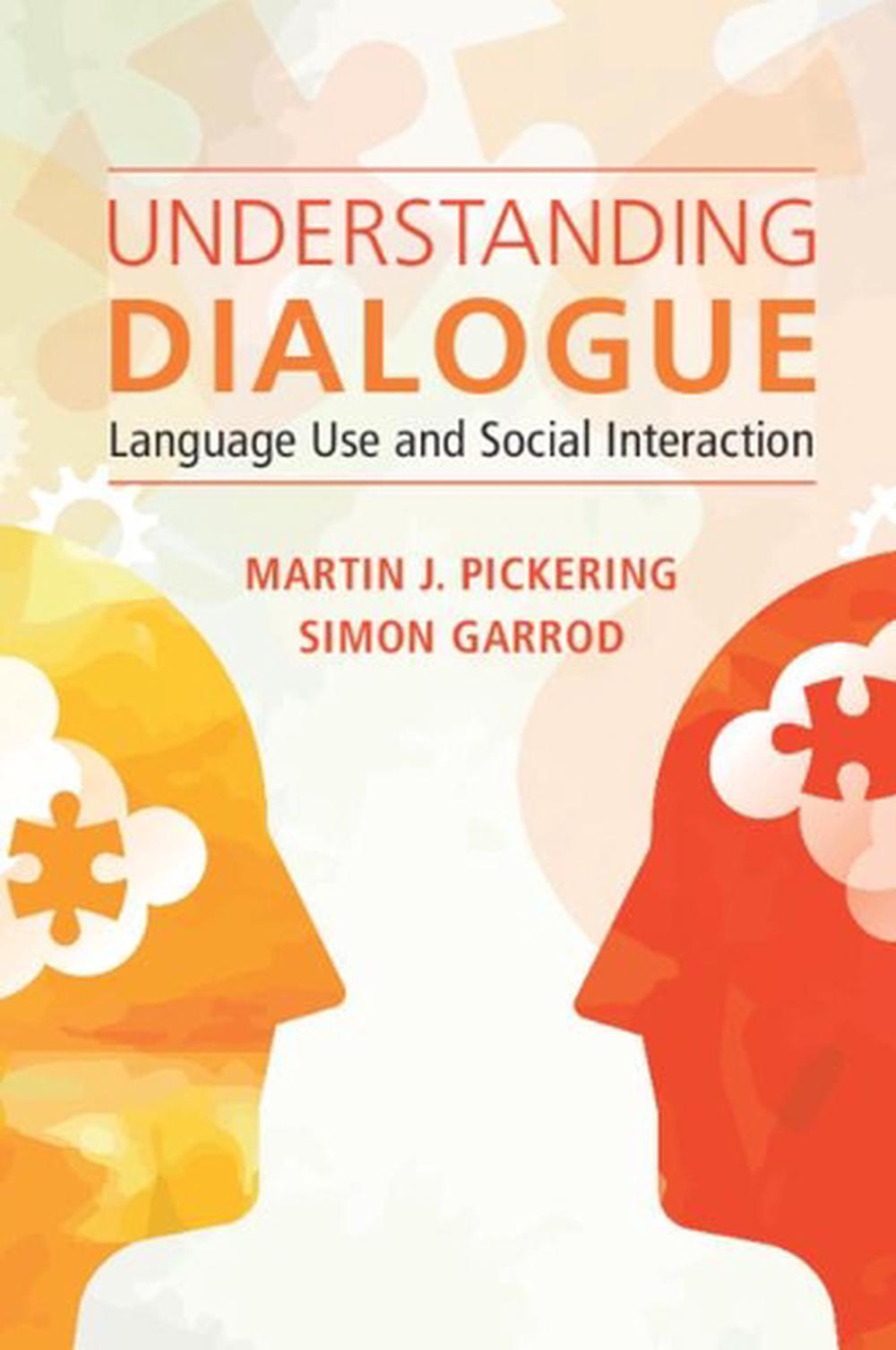
Understanding Dialogue
by Martin J. Pickering, Simon Garrod
Through an innovative framework, the authors explore dialogue as a form of cooperative joint activity, in which individuals must align cognitive representations of language and context to communicate effectively. It will be a key reference point for advanced graduate students and researchers in linguistics, psychology and cognitive linguistics.
Paperback
English
Brand New
Publisher Description
Linguistic interaction between two people is the fundamental form of communication, yet almost all research in language use focuses on isolated speakers and listeners. In this innovative work, Garrod and Pickering extend the scope of psycholinguistics beyond individuals by introducing communication as a social activity. Drawing on psychological, linguistic, philosophical and sociological research, they expand their theory that alignment across individuals is the basis of communication, through the model of a 'shared workspace account'. In this workspace, interlocutors are actors who jointly manipulate and control the interaction and develop similar representations of both language and social context, in order to achieve communicative success. The book also explores dialogue within groups, technologies, as well as the role of culture more generally. Providing a new understanding of cognitive representation, this trailblazing work will be highly influential in the fields of linguistics, psychology and cognitive linguistics.
Table of Contents
1. The Challenge of Dialogue; Part I. The Shared Workspace Framework: 2. A Systems Analysis of Joint Activity; 3. Executing, Understanding and Controlling Joint Activity; 4. Dialogue as a Joint Activity; 5. Producing, Controlling, and Understanding Dialogue; Part II. Alignment During Dialogue: 6. Interactive Alignment and Linguistic Representations; 7. Alignment of Dialogue Models; Part III. Using the Shared Workspace Efficiently: 8. Saying Just Enough; 9. Speaking in Good Time; Part IV. Extending the Shared Workspace Framework: 10. Communication Beyond the Minimal Dyad; 11. Culture and Language Use; 12. Conclusion.
Review
'What could be easier than having a conversation with another person? But behind this apparent ease hides a complex world of cognitive and social mechanisms. Presenting state-of-the-art research, Pickering and Garrod give the reader a guided tour of the science of dialogue, explaining convincingly why dialogue is humankind's most remarkable achievement. This book is a milestone in our understanding of dialogue that will influence the field for decades.' Robert Hartsuiker, Professor of Psychology, Ghent University
'This book is both timely and important. The consequences of the Covid-19 pandemic have changed conditions for communication in multiple ways, from interactions behind face masks to dialogues via Skype and Zoom.' Peter Hagoort, Neurobiology of Language Department, Max Planck Institute for Psycholinguistics
Promotional
Using a novel model, this book investigates the psycholinguistics of dialogue, approaching language use as a social activity.
Review Quote
'What could be easier than having a conversation with another person? But behind this apparent ease hides a complex world of cognitive and social mechanisms. Presenting state-of-the-art research, Pickering and Garrod give the reader a guided tour of the science of dialogue, explaining convincingly why dialogue is humankind's most remarkable achievement. This book is a milestone in our understanding of dialogue that will influence the field for decades.' Robert Hartsuiker, Professor of Psychology, Ghent University
Promotional "Headline"
Using a novel model, this book investigates the psycholinguistics of dialogue, approaching language use as a social activity.
Description for Bookstore
Through an innovative framework, the authors explore dialogue as a form of cooperative joint activity, in which individuals must align cognitive representations of language and context to communicate effectively. It will be a key reference point for advanced graduate students and researchers in linguistics, psychology and cognitive linguistics.
Description for Library
Through an innovative framework, the authors explore dialogue as a form of cooperative joint activity, in which individuals must align cognitive representations of language and context to communicate effectively. It will be a key reference point for advanced graduate students and researchers in linguistics, psychology and cognitive linguistics.
Details