




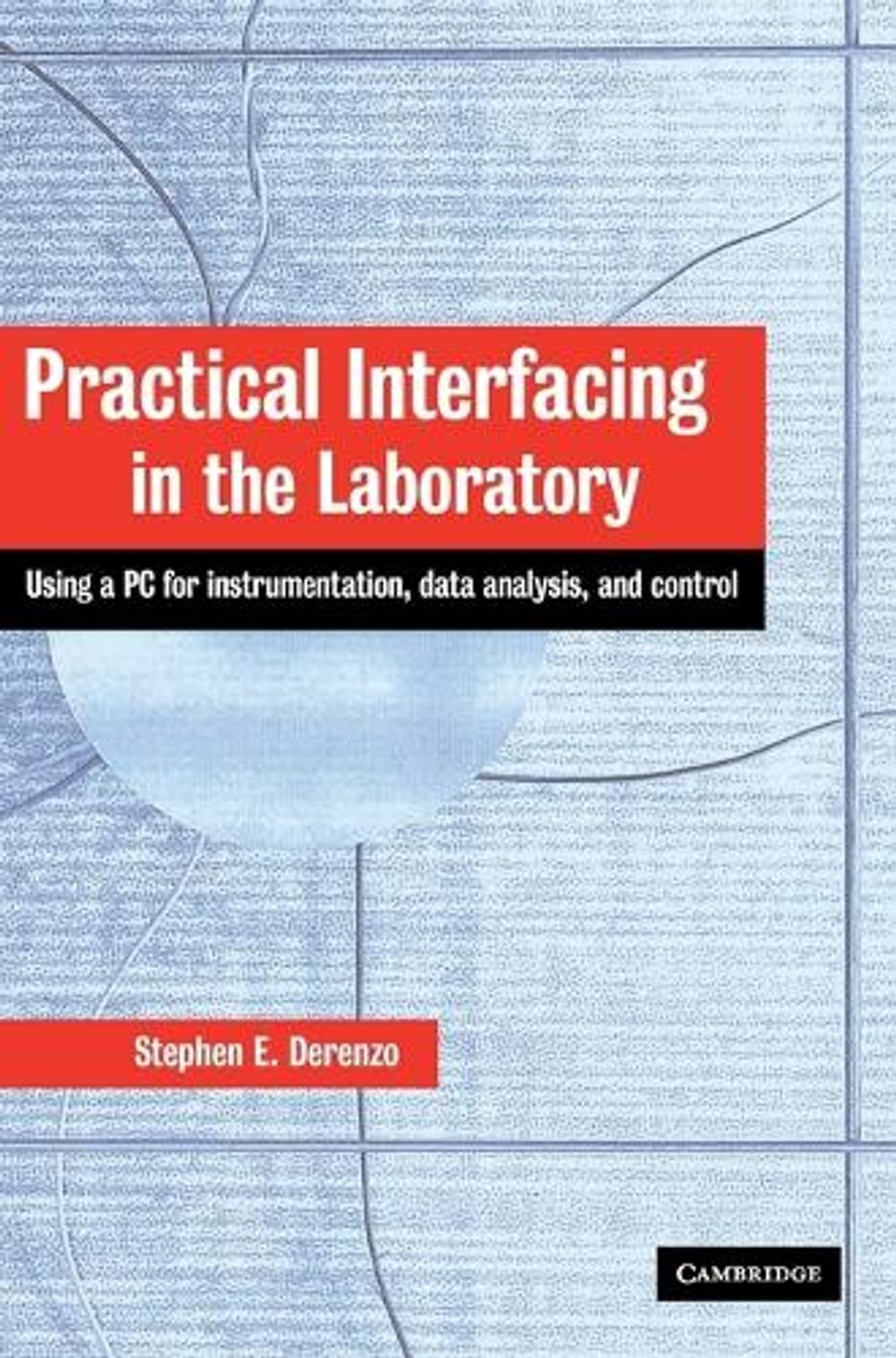
Practical Interfacing in the Laboratory
by Stephen E. Derenzo
This text describes how to use a desk-top computer to sense, analyse and display real-world quantities, including displacement, temperature, force, sound, light, and biomedical potentials.
Hardcover
English
Brand New
Publisher Description
This text describes in practical terms how to use a desk-top computer to monitor and control laboratory experiments. The author clearly explains how to design electronic circuits and write computer programs to sense, analyse and display real-world quantities, including displacement, temperature, force, sound, light, and biomedical potentials. The book includes numerous laboratory exercises and appendices that provide practical information on microcomputer architecture and interfacing, including complete circuit diagrams and component lists. Topics include analog amplification and signal processing, digital-to-analog and analog-to-digital conversion, electronic sensors and actuators, digital and analog interfacing circuits, and programming. Only a very basic knowledge of electronics is assumed, making it ideal for college-level laboratory courses and for practising engineers and scientists.
Table of Contents
Preface; 1. Digital tools; 2. Analog tools; 3. Analog-digital conversion and sampling; 4. Sensors and actuators; 5. Data analysis and control; Appendix A. Grounding and shielding; Appendix B. Experimental uncertainties; Appendix C. C programming hints; Appendix D. Numerical methods and C functions; Appendix E. Summary of data translation DT3010 PCI plug-in board; Appendix F. Using the digital oscilloscope to record waveforms; Appendix G. Electrical hazards and safety; Appendix H. Standard resistor and capacitor values; Appendix I. Ascii character codes; Appendix J. Glossary; Index.
Review
'… having copies in both the library and the laboratory is highly recommended.' IEE Review
Promotional
How to interface a PC to sense, analyze and display experimental results in the laboratory.
Long Description
This practical text describes how to use a desk-top computer to monitor and control laboratory experiments. Stephen Derenzo clearly explains how to design electronic circuits and write computer programs to sense, analyze and display real-world quantities, including displacement, temperature, force, sound, light, and biomedical potentials. He includes numerous laboratory exercises and appendices that provide practical information on microcomputer architecture and interfacing, including complete circuit diagrams and component lists. A very basic knowledge of electronics is assumed, making the book ideal for college-level laboratory courses and for practicing engineers and scientists.
Review Quote
"...this is a good text and worth consideration for anyone teaching a course in interfacing or experimentation." Physics Today
Promotional "Headline"
How to interface a PC to sense, analyze and display experimental results in the laboratory.
Description for Bookstore
This text describes in practical terms how to use a desk-top computer to sense, analyse and display real-world quantities, including displacement, temperature, force, sound, light, and biomedical potentials. Only a very basic knowledge of electronics is assumed, making it ideal for college-level laboratory courses and practising engineers and scientists.
Description for Library
This text describes in practical terms how to use a desk-top computer to sense, analyse and display real-world quantities, including displacement, temperature, force, sound, light, and biomedical potentials. Only a very basic knowledge of electronics is assumed, making it ideal for college-level laboratory courses and practising engineers and scientists.
Details


